

A little bit of history...
The earliest traces of soap making date back approximately 5000 years.
During excavations in ancient Babylon, clay jars were found bearing inscriptions describing a mixture of boiled fats and ashes.
In 1500 BC, papyri were found in which the Egyptians described how to combine animal oils and alkaline salts to obtain a soap-like substance for their personal hygiene and to combat skin diseases.
The Greeks combined a mixture of clay, ash and sand on their bodies and then scraped their skin with a strigil after coating it with oil; the Romans regarded the baths as the basis of hygiene and spent most of their time there, while the Gauls used soap mainly to color their hair.
After the fall of Rome in 476 AD, the habit of bathing declined and the resulting lack of hygiene, along with the unsanitary living conditions of the time, contributed to the spread of diseases during the Middle Ages and more particularly to that of the Great Black Death of the 14th century.
Marseille
an important production center
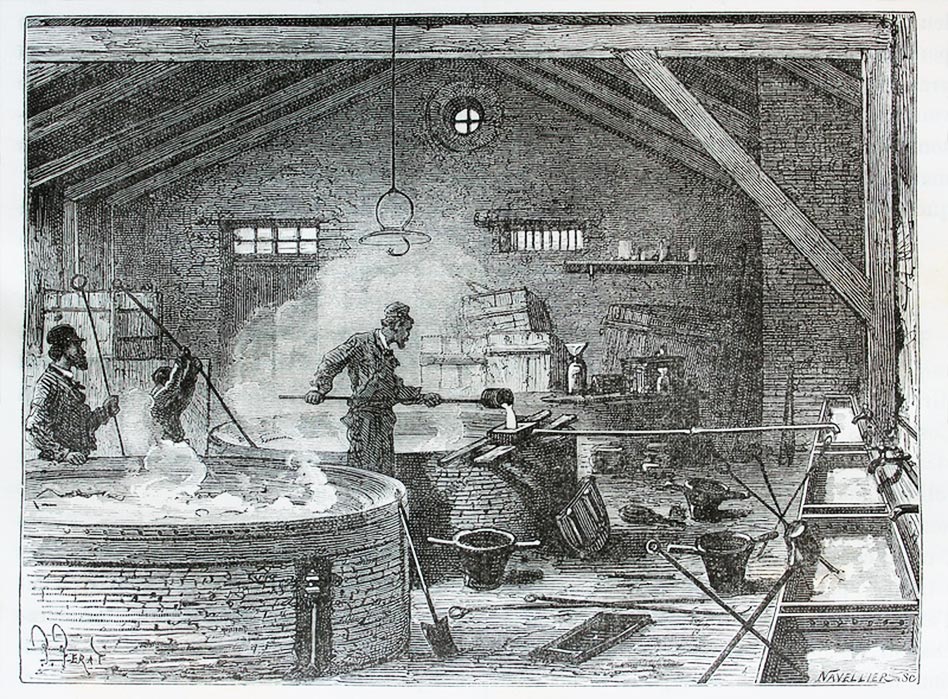
From the 15th century onwards, the Marseille region became an important production center. Animal fats were replaced by local olive oil, resulting in a gentler soap. The soap industry flourished but remained a luxury item affordable only to the wealthy. At the time, soda ash was produced from the ashes obtained by burning plants such as glasswort.
Process for manufacturing soda ash from table salt
In 1791, the French chemist Nicolas Leblanc obtained a patent for a process of manufacturing soda ash from table salt. This process made it possible to supply soda ash at a low price. Around the same time, cleanliness and bathing became fashionable again.
In 1823, the chemist Eugène Chevreul discovered the relationship between fats, glycerin, and fatty acids. And the Belgian chemist Ernest Solvay found a process for creating pure sodium hydroxide in large quantities.
After the First World War, the chemical industry created synthetic cleaning agents to address the wartime shortage of fats. These gradually replaced traditional soap, which was considered easier to use and more modern.
Nowadays, as the world becomes aware of the harmful effects of these cleaning agents, traditional soap is experiencing a resurgence of interest.
Source:
https://savonrielalimoniere.fr/lhistoire-du-savon/
Photo at the top of the page: https://www.francoislambert.one/blogs/blogue-de-francois/lhistoire-insoupconnee-du-savon-un-voyage-a-travers-le-temps